The Garage
New Haven, CT
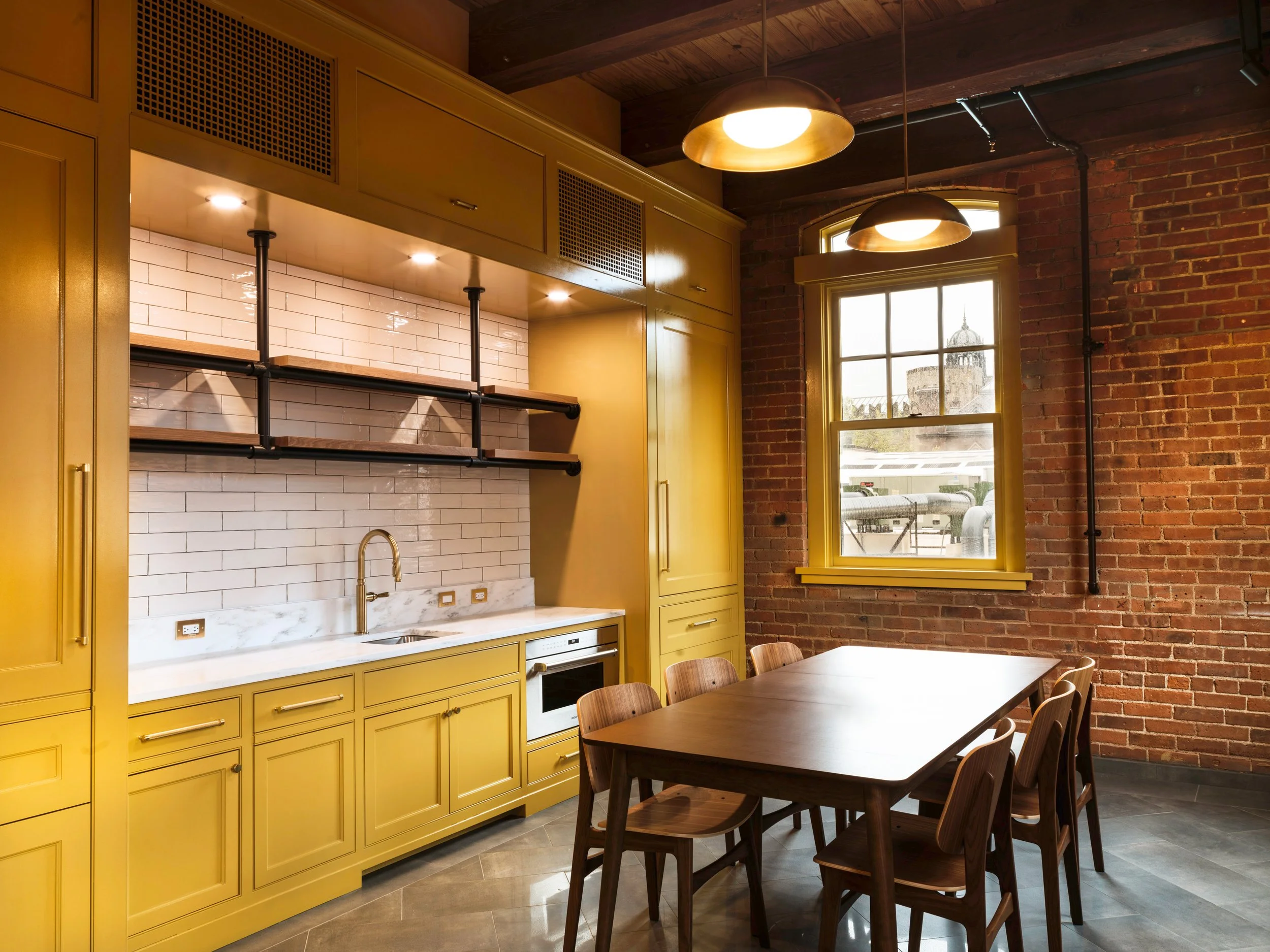
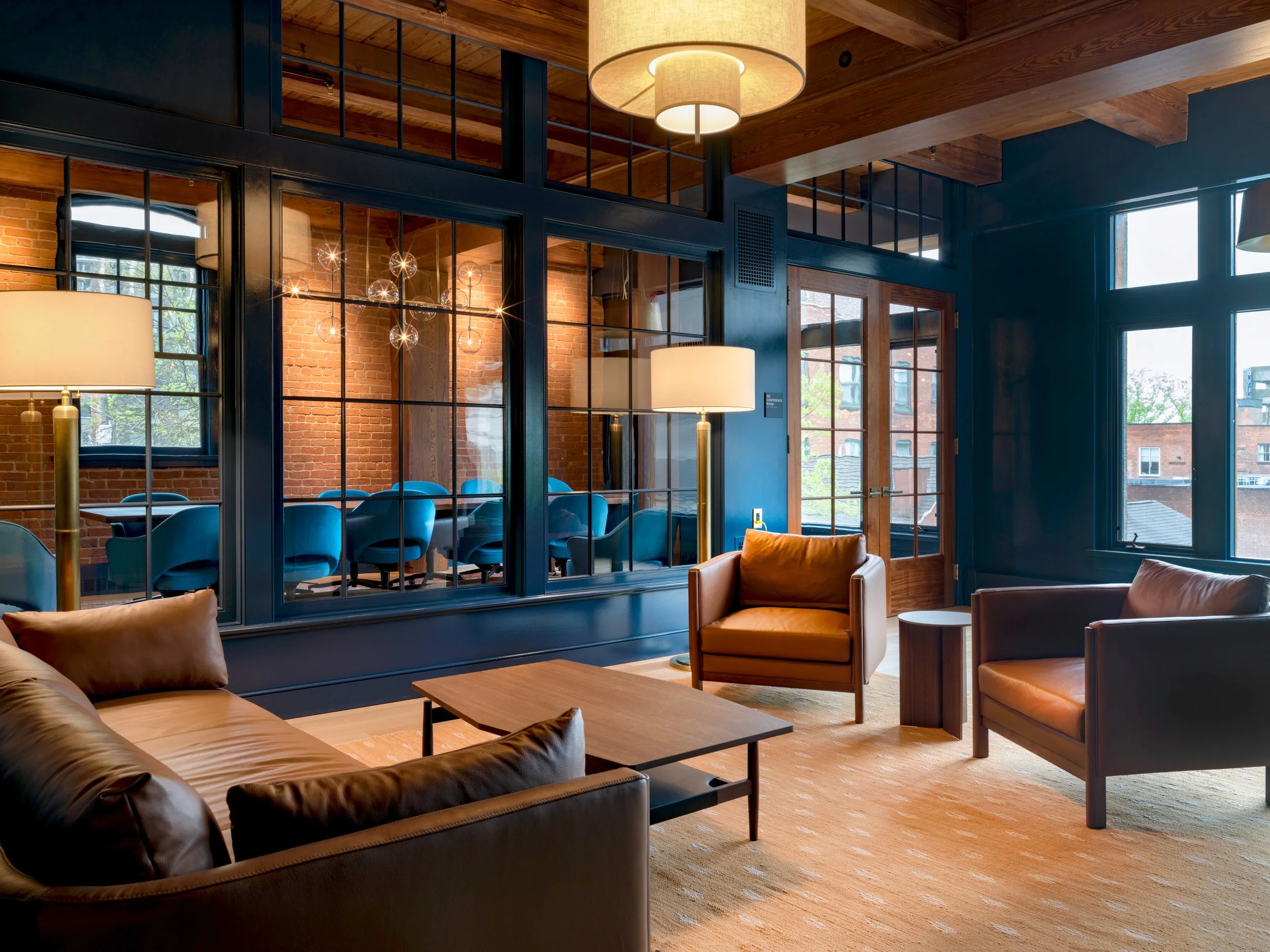
The Yale Center for British Art, a world-renowned museum and research facility, working with the Yale Office of Facilities, commissioned our firm to transform a third-floor industrial loft space in New Haven’s Chapel Street Historic District into an office space for their Research and Publications departments. We endeavored to provide an enduring and adaptable home for their staff, fulfill their specific programmatic requirements, and create a delightful and inspiring work environment. Material and color palate, form, ambiance and décor were prioritized alongside functional demands to enlarge assumptions about the way contemporary office spaces ought to look and operate.
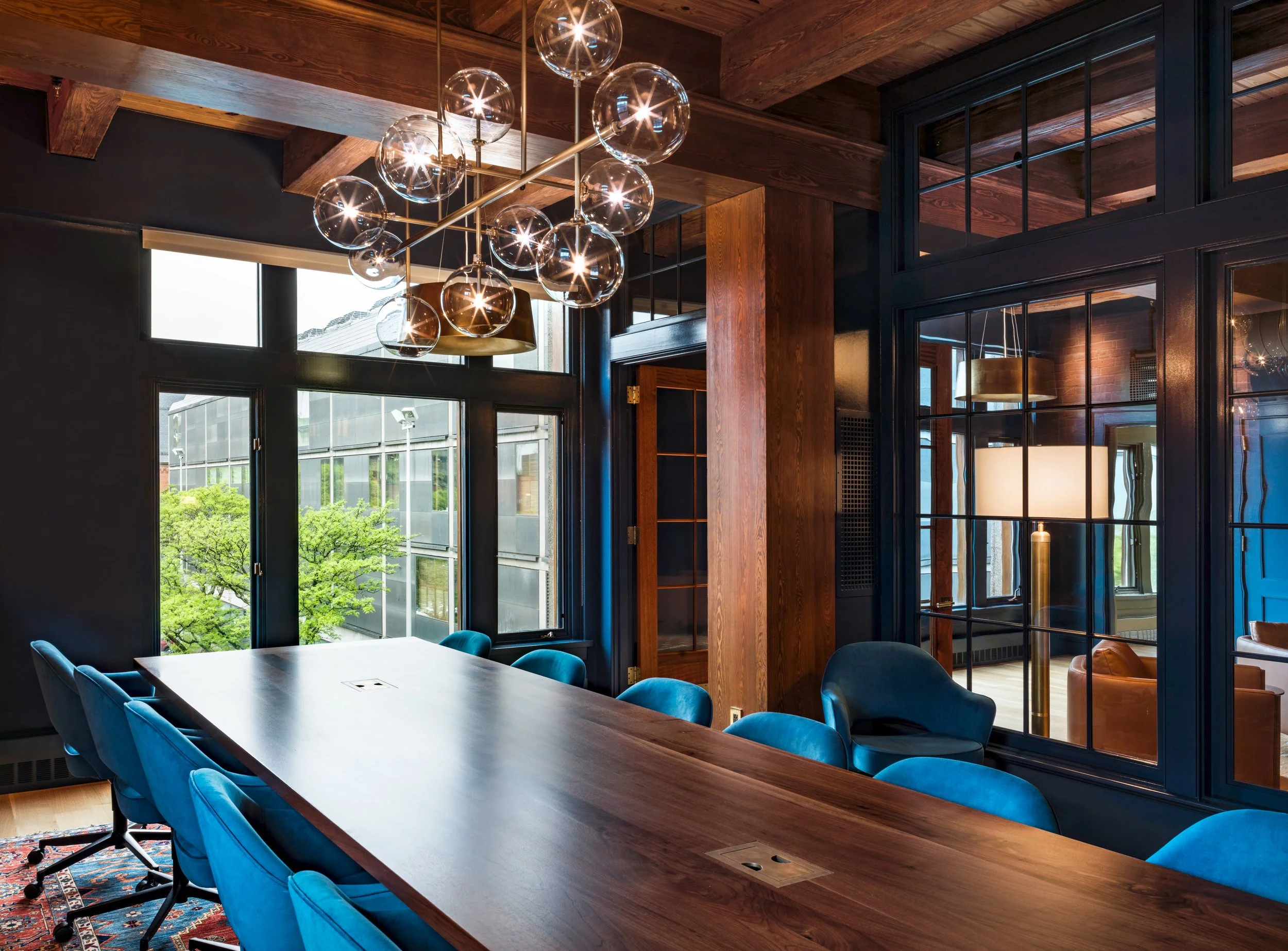
Forty-one High Street, designed in 1909 by prominent New Haven architects Brown & von Beren as a garage for the New Haven Taxi Cab Company, had been substantially rebuilt with designs by Cesar Pelli & Associates in the late 1980’s. Overlooking the Center’s iconic Louis Kahn designed home, the existing space had retained the original building’s brick masonry walls, timber framing, and art deco façade details with added modern core facilities but no meaningful interior design. Upon determining requirements for private offices, open workspaces, a conference room, kitchen, and associated support spaces, our project team worked within the constraints of the garage’s existing structural grid to array a series of distinctively colorful, custom wood storefronts throughout the space. These partitions, featuring large divided-lite sashes with both restoration and fluted privacy glazing, establish a new architectural layer framing views throughout the space. Care was taken to magnify the beauty of the existing exposed wood ceiling while providing upgrades to building systems. Wood girder and column enclosures provide passage for new HVAC services, electrical, audio-visual, acoustic sound masking, and security systems.
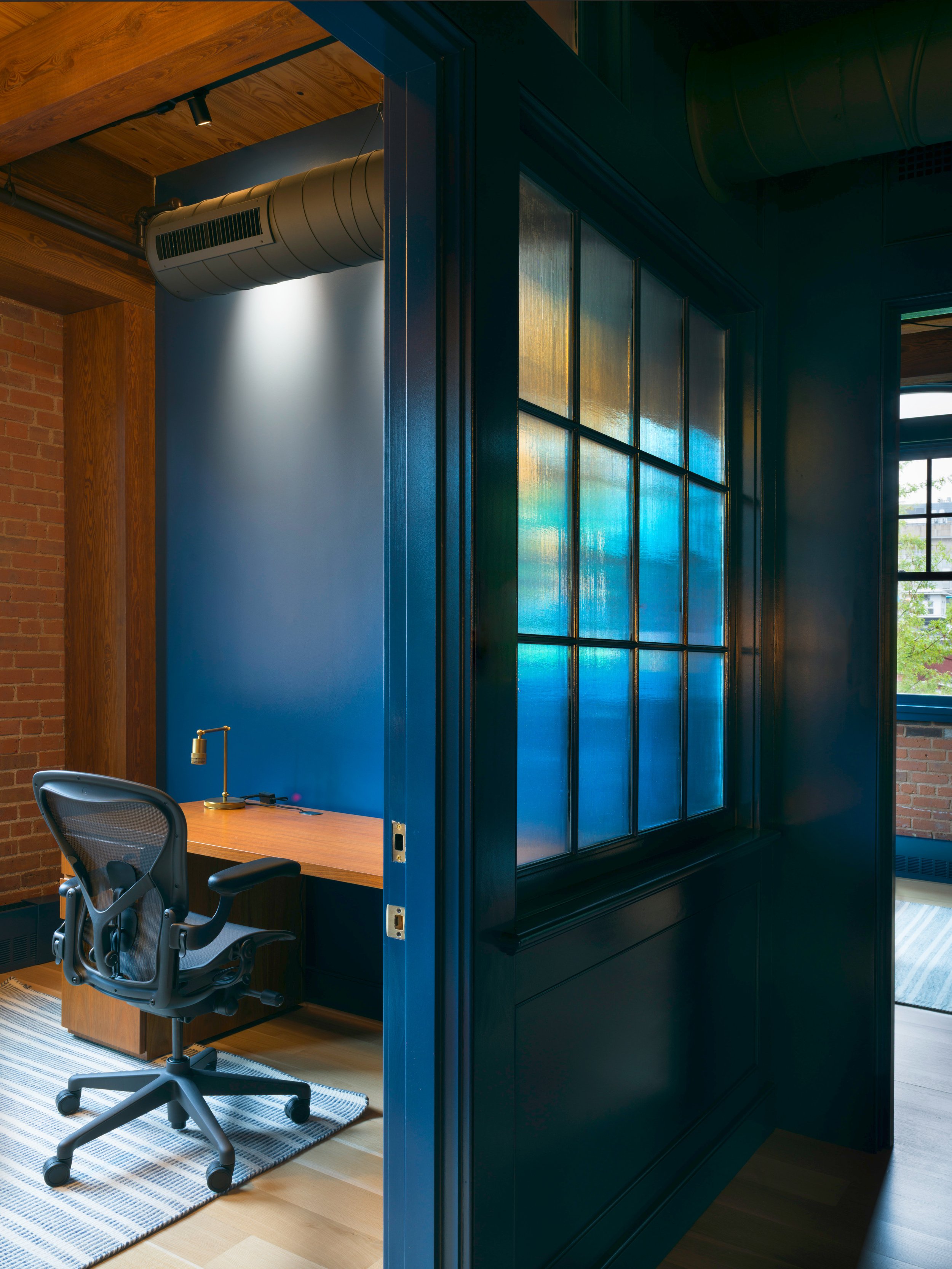
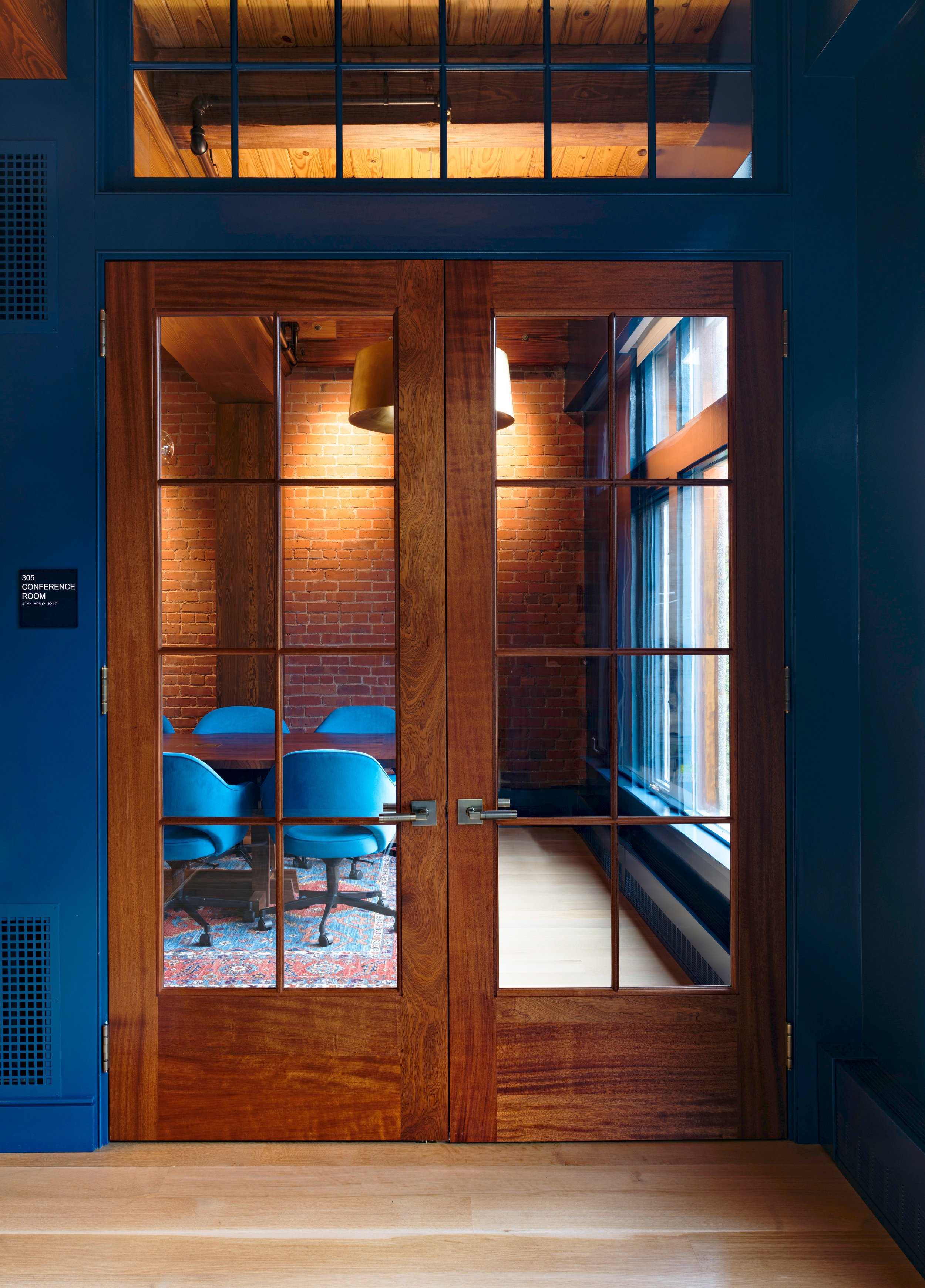
We worked collaboratively with local craftspeople, materials, and natural resources to ensure sustainability and community resilience. Both embodied and operational energy was minimized with the use of reclaimed New Haven urban lumber, locally fabricated and regionally sourced building components, improved mechanical performance, and attention to daylighting. The project rehabilitates century-old structural and material features into a timeless and elegant office environment designed to both celebrate the past and thrive in the future.